Portfolio & Prioritization
Prioritization is not about ranking a list. It is deciding what should move forward.
Demands and projects may have different characteristics, evaluation criteria, and ways of working. Supria Workspaces creates a common context to structure priorities, compare initiatives, and support portfolio decisions.
From demand to decision. From score to portfolio context.
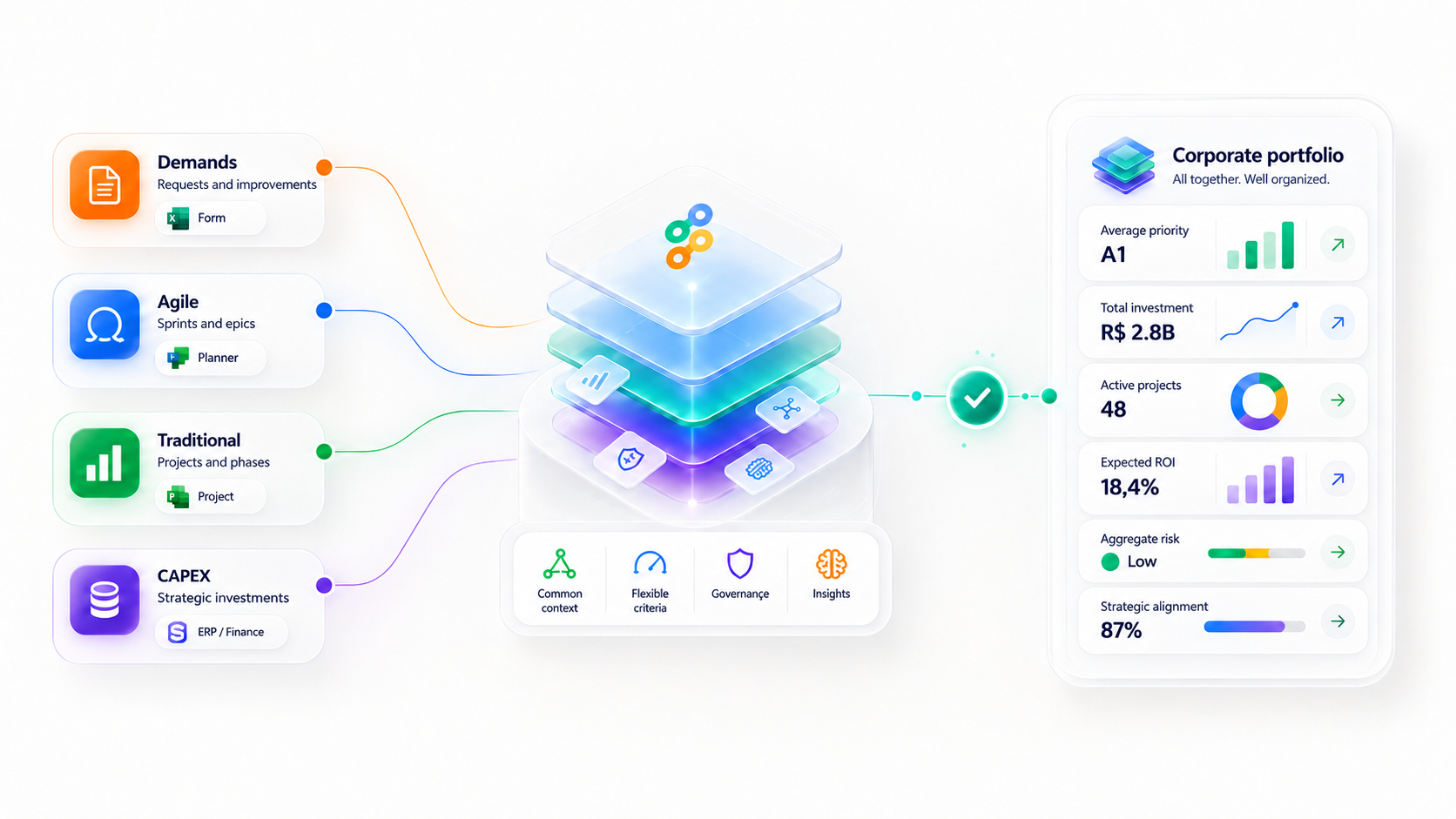
Portfolio reality
Each area can execute differently. The organization still needs to see the portfolio as a whole.
An initiative does not stop being part of the portfolio because one team uses traditional planning, another works with agile practices, and a third depends on specific execution tools.
The execution tool should not define the boundaries of the portfolio.
Different ways of working → one corporate context to govern priorities
Decision Governance
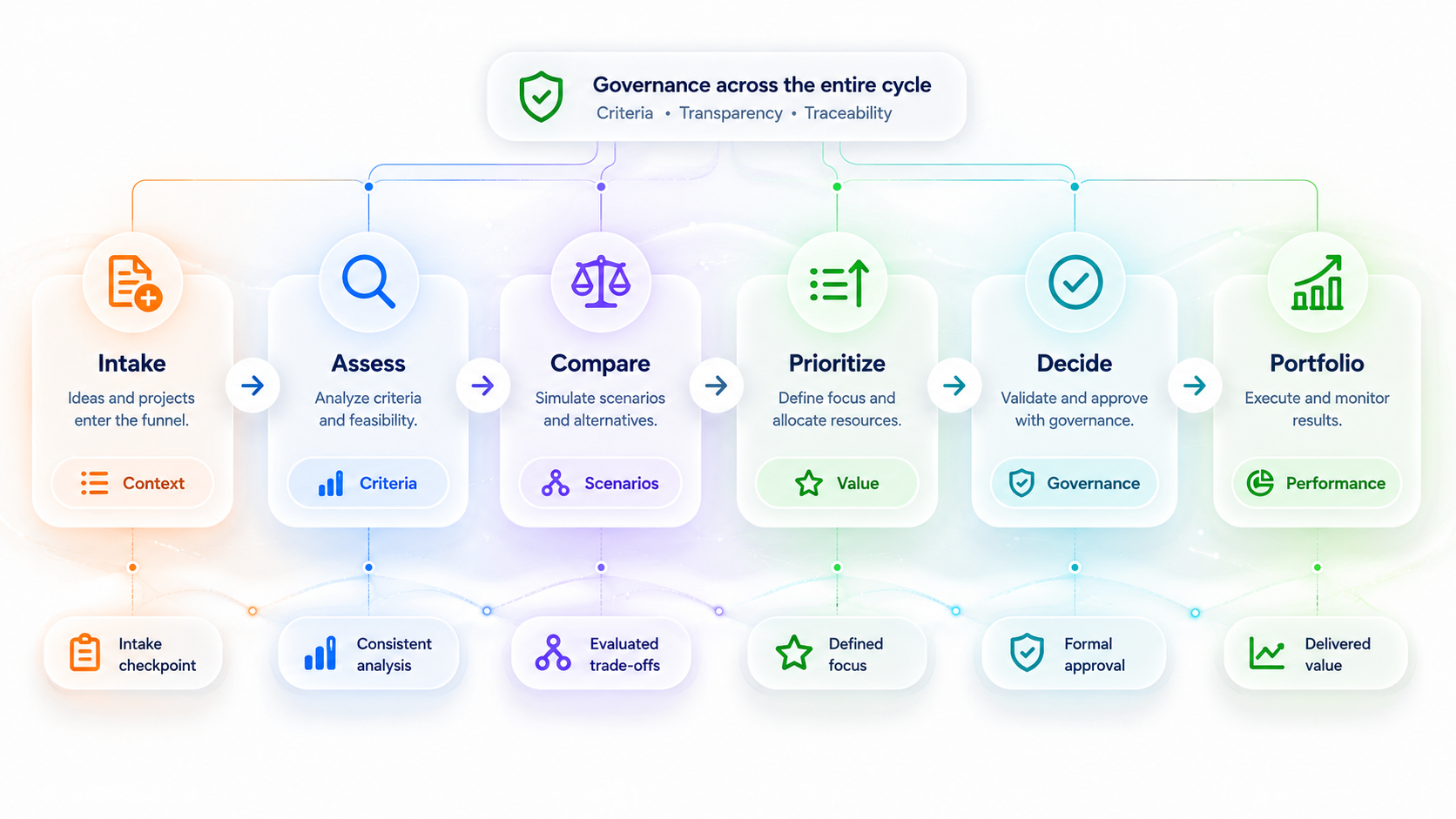
From demand to decision, each step adds context.
Prioritization is part of a broader sequence. First, understand what is being proposed, define how to evaluate it, create comparability, and then decide what should move forward within the portfolio.
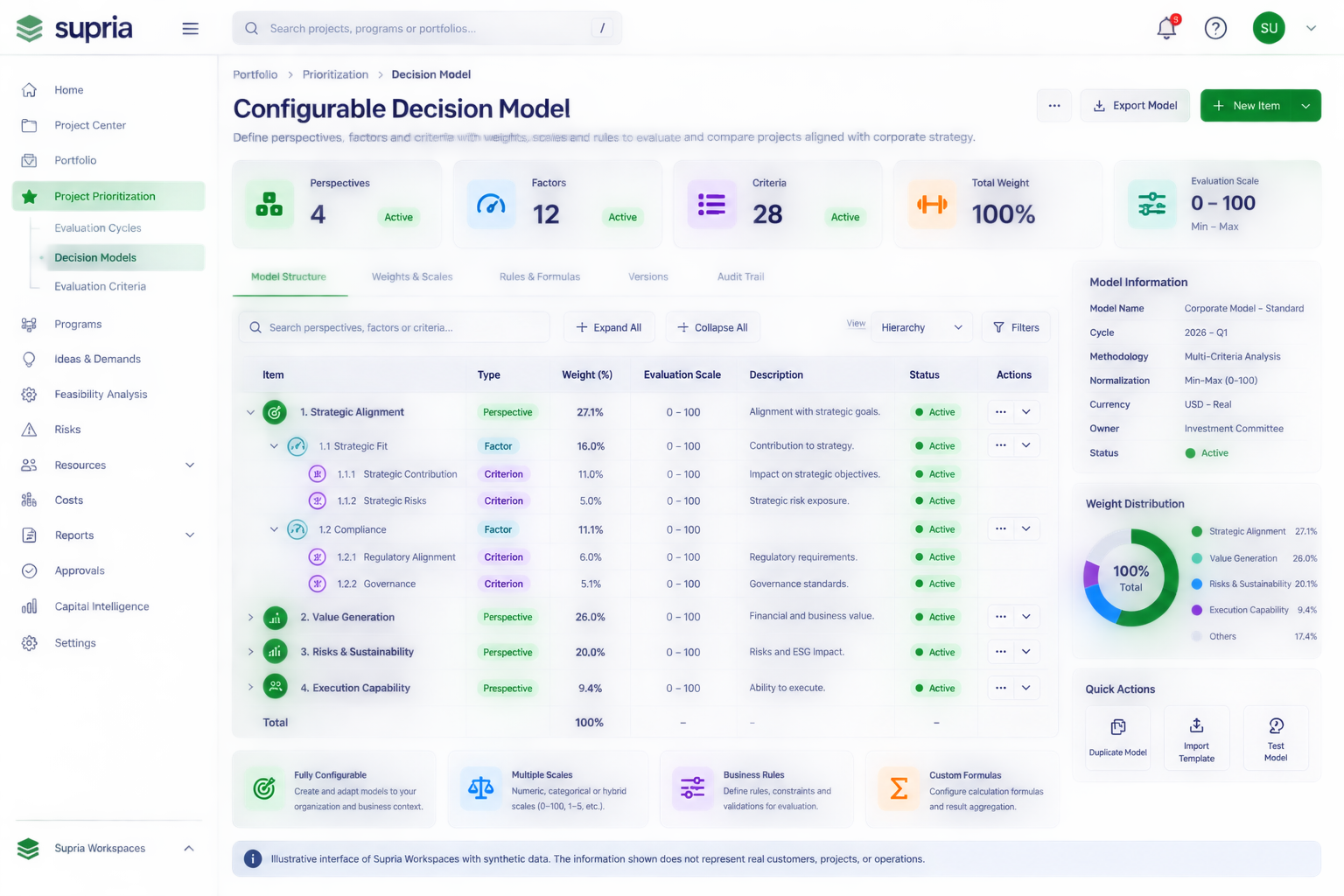
Configurable Decision Models
Your methodology should not have to fit the tool. The tool should be able to represent your methodology.
Structure different prioritization models by portfolio or investment type, combining perspectives, factors, criteria, weights, scales, options, rules, and formulas.
Consistency does not mean evaluating everything the same way.
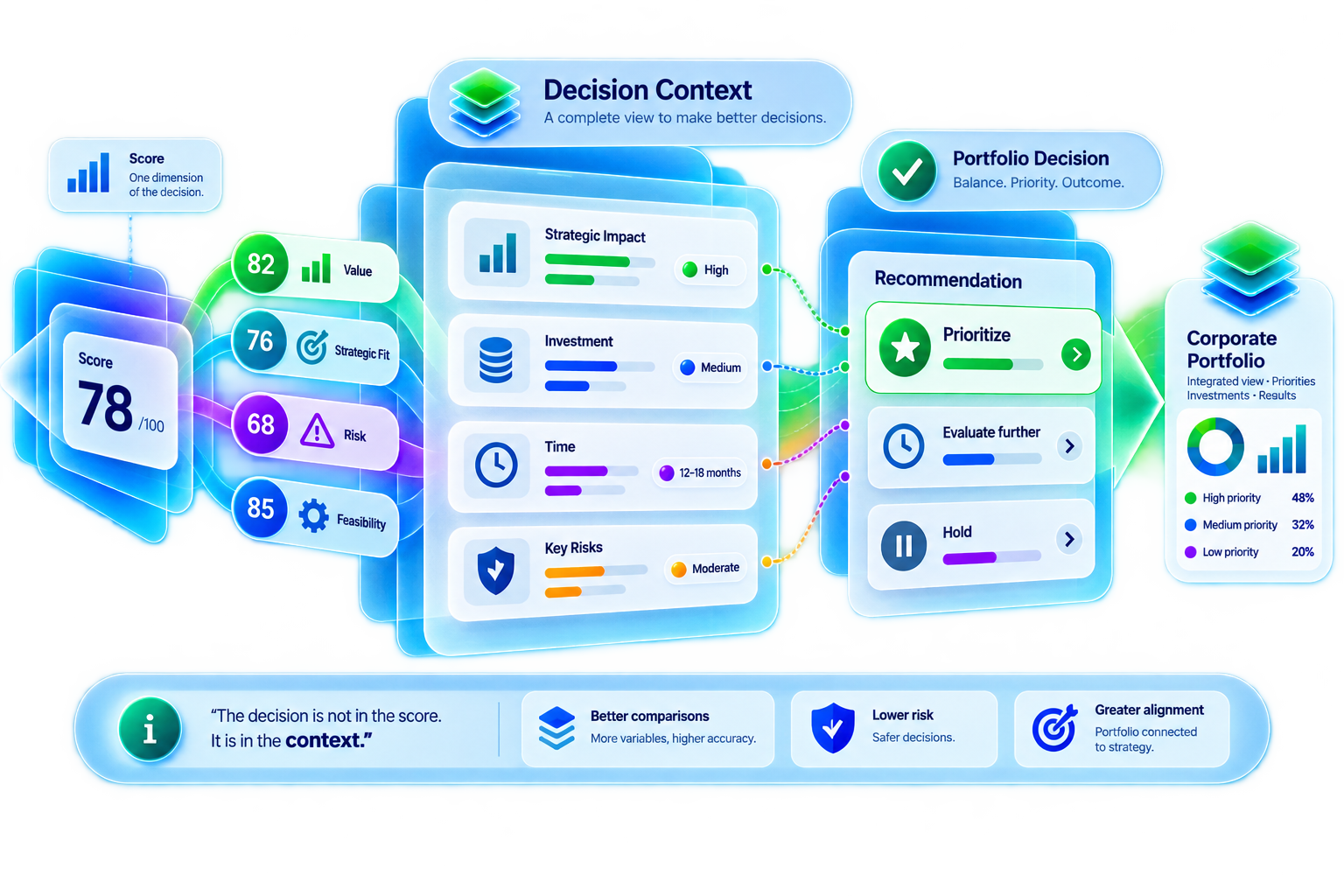
Beyond the Score
The score structures the evaluation. The decision happens in the context of the portfolio.
A common score makes different initiatives more comparable. But deciding what should move forward requires understanding what is behind that score and how each initiative relates to the portfolio as a whole.
One Portfolio
Different ways of working. One portfolio context.
Teams can preserve the approach and tools that fit execution. The organization maintains a common view of demands, projects, priorities, investments, and decisions.
Execution can remain distributed. The portfolio view does not have to be.
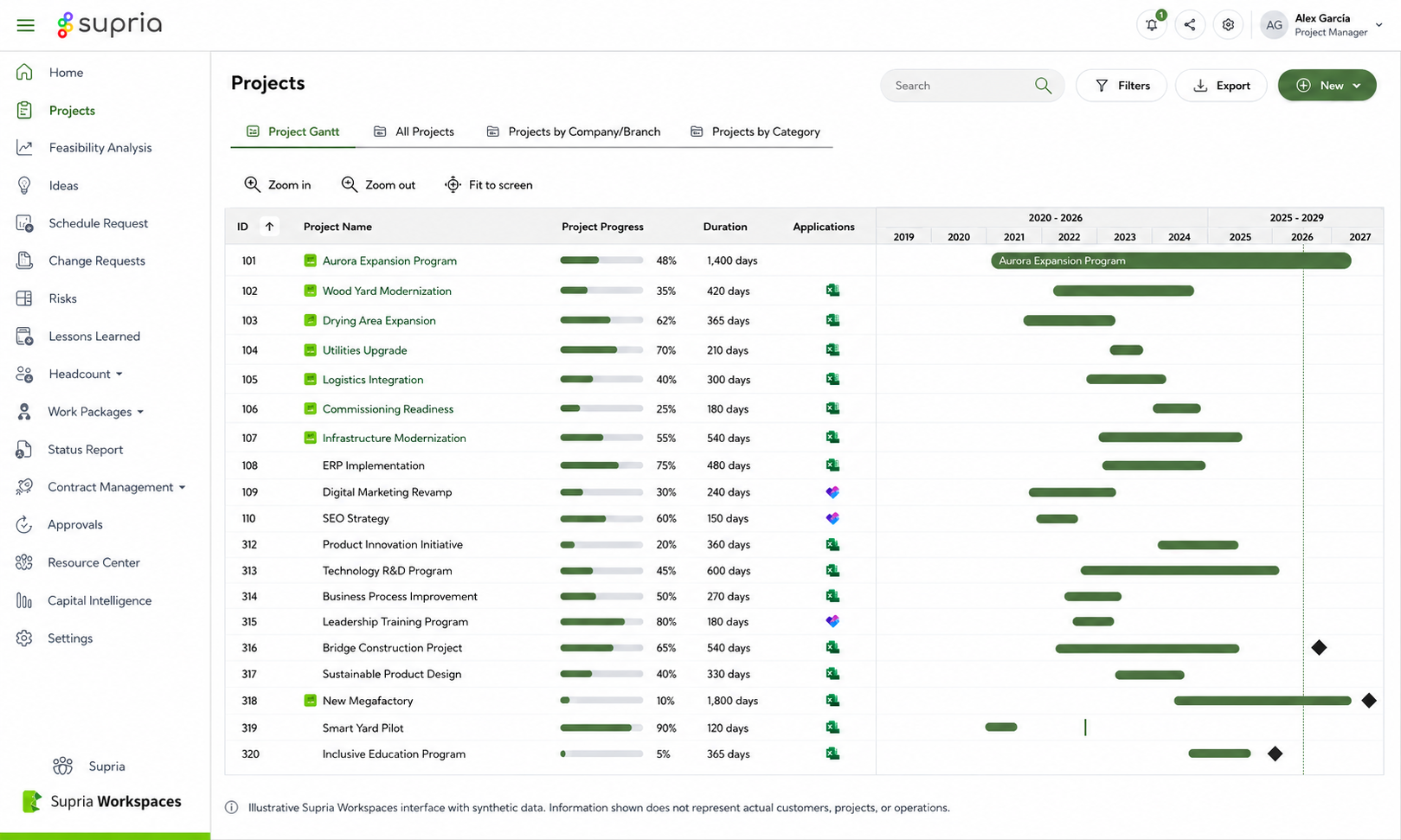
SUPRIA WORKSPACES IN ACTION
From portfolio visibility to the detail that supports the decision.
Explore how consolidated visibility, prioritization, and configurable models help make criteria, comparisons, and decisions more transparent.
Corporate portfolio view.
Demands and projects remain visible in the same context, even when execution follows different approaches and tools.
Illustrative Supria Workspaces interfaces and representations with synthetic data. The information shown does not represent real customers, projects, or operations.
Next step
Structure different criteria without losing sight of what is actually competing for priority.
Start with the reality of your portfolio, the decision models your organization already uses, and the tools that are already part of execution.